Why Interrupting the New Year Rush Is a Leadership Advantage

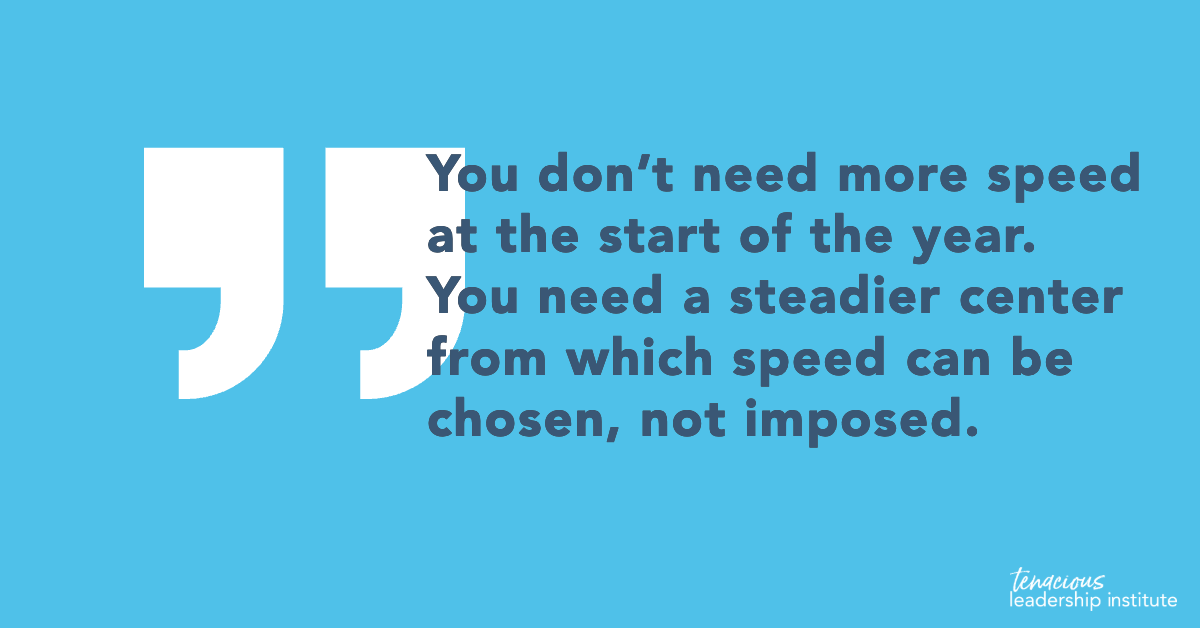
The pressure to “hit the ground running” is deeply ingrained in organizational culture. Yet neuroscience and performance research consistently show that clarity, focus, and decision quality decline when leaders operate under sustained urgency. When the nervous system is in a heightened, reactive state, the brain prioritizes speed and threat detection over reflection, creativity, and strategic thinking.
Research from the Harvard Business School and neuroscience studies on stress and executive function show that chronic time pressure reduces activity in the prefrontal cortex — the part of the brain responsible for judgment, perspective-taking, and self-regulation. In other words, rushing feels productive, but it often undermines the very capacities leaders need most at the start of a new year.
Interrupting the new year rush doesn’t mean disengaging or lowering standards. It means choosing a different starting point — one that supports grounded presence, sharper focus, and better decisions.
Three ways leaders can do this in practice:
1. Slow the start to speed the right outcomes.
Resist the urge to immediately fill every open space on your calendar. Create intentional buffer time in the first weeks of the year to think, reflect, and prioritize. Leaders who allow for this pause are better able to distinguish between what feels urgent and what is truly important and to set a pace others can sustainably follow.
2. Narrow your focus before expanding your effort.
Rather than setting broad, all-encompassing goals, identify a small number of leadership priorities that genuinely deserve your attention right now. Focus reduces cognitive load and decision fatigue, allowing your nervous system to stay regulated and your thinking to remain clear. Fewer priorities, held well, often lead to greater momentum than many held loosely.
3. Lead your state before leading your strategy.
How you show up shapes how others respond. Grounded leaders regulate their own nervous system first — through pauses, breath, or simple awareness — before stepping into decisions and conversations. This steadiness signals safety and clarity to teams, enabling better collaboration, trust, and follow-through during times of change.
In a year that will inevitably bring complexity and acceleration, the leaders who interrupt the rush aren’t falling behind. They’re building the foundation for focus, resilience, and sustained performance — starting from presence rather than pressure.
Leadership Practice
A 15-Minute Reset to Start the Year Differently
Sometime this week, block 15 uninterrupted minutes and reflect on the following:
Notice the rush.
Where do you feel pressure to move faster than is actually necessary? What expectations — internal or external — are driving that urgency?
Name your focus.
If you could choose just three leadership priorities that truly deserve your energy in the next 90 days, what would they be?
Anchor your presence.
Ask yourself: What helps me stay grounded and clear when things accelerate? Identify one practice you will protect in the coming weeks (a pause before meetings, fewer reactive decisions, protected thinking time).
This is not about perfect plans. It’s about choosing how you want to lead into the year — before the year leads you.
Author
Athena Williams, Founder and CEO of Tenacious Leadership Institute, has been supporting leaders worldwide to become more tenacious for over 20 years. She has found that tenacity is the key to sustained leadership success in today’s ever-changing world. Through her coaching and leadership development programs, she helps leaders expertly handle change, complexity and other challenges so they can quickly get better results for themselves, their teams and their organizations.
Take the first step to becoming a tenacious leader by scheduling a call with us.